
 MiAszende
 Request a quotation


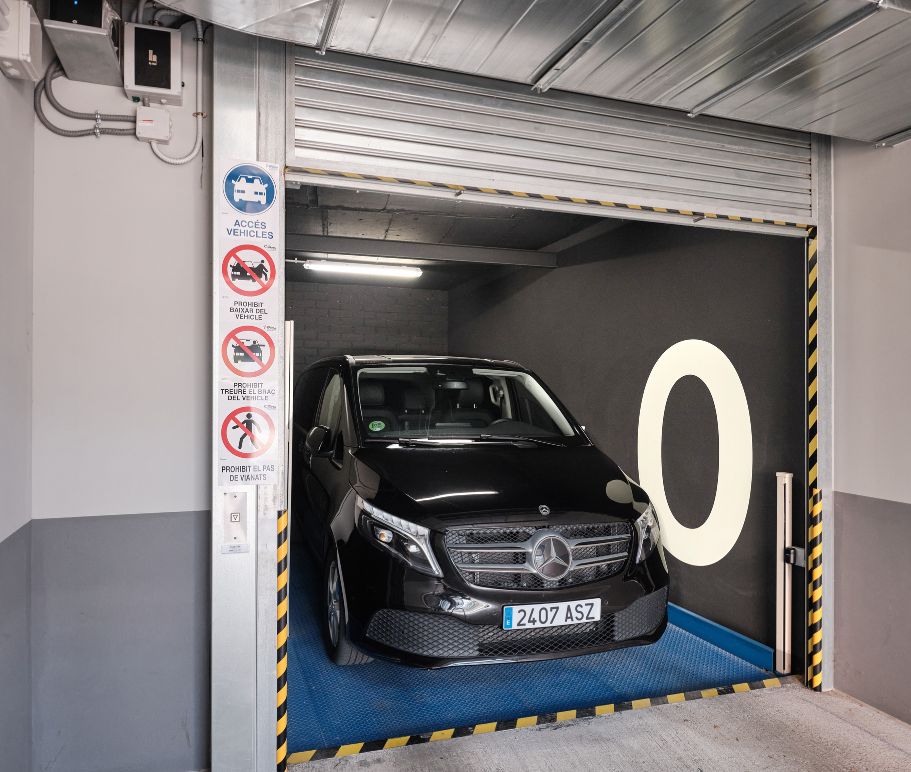
In buildings with limited space, car lifts have become an effective solution for optimising parking and making better use of the available surface area.
For this reason, knowing the minimum dimensions of a car lift is one of the first aspects that should be analysed before its installation.
Minimum car lift dimensions according to the type of building
Before defining the measurements of a car lift, it is important to understand that there is no standard dimension valid for every project. Installation requirements vary depending on the type of building, the available space, the number of vehicles that will use the system and the structural characteristics of the property.
The most common configurations include the following:
Minimum measurements for small cars:
In the case of a building where small cars predominate, the minimum dimensions of a car lift may be more compact. In this type of installation, platforms usually range between 2.30 metres wide and 5 metres long.
Dimensions for SUVs and family vehicles:
In this type of installation, it is advisable to work with platforms of at least 2.50 metres wide and 5.50 metres long, as well as greater headroom to facilitate vehicle access and manoeuvring.
Space required for electric vehicles:
When defining the minimum dimensions of a car lift for electric vehicles, it is advisable to plan for measurements similar to or greater than those of an SUV: a platform of at least 2.50 metres wide and 5.50 metres long, with a minimum headroom of 2.20 metres. In addition, due to the weight of the batteries, the load capacity should be at least between 2,500 and 3,000 kg, depending on the vehicle model and frequency of use.
Measurements for vans and light commercial vehicles:
In the case of light commercial vehicles or vans, the minimum dimensions of a car lift must be considerably larger. It is advisable to work with platforms of at least 2.80 metres wide and between 6 and 7 metres long, as well as headroom of more than 2.50 metres.
Minimum cabin width:
The cabin width is one of the most important elements for ensuring safe manoeuvres. In this regard, the ideal approach is to leave at least 25 to 35 centimetres free on each side of the vehicle.
Minimum platform length:
Another key element within the minimum dimensions of a car lift is the platform length. In most residential installations, it is advisable to install platforms between 5 and 5.50 metres long, although this measurement may increase for SUVs, electric vehicles or light commercial vehicles.
Required headroom:
A minimum headroom of between 2.10 and 2.20 metres is recommended for conventional passenger cars. However, in buildings where taller vehicles circulate, it is advisable to exceed 2.40 metres to ensure comfortable manoeuvring.
Car lift load capacity:
When defining the minimum dimensions of a car lift, load capacity is a fundamental aspect, as it directly affects the structure, the platform size and the type of lifting system required. In residential installations, car lifts usually offer capacities of between 2,500 and 3,000 kg, which are sufficient for passenger cars, SUVs and many current electric vehicles.
Space for door opening:
A platform between 2.50 and 2.70 metres wide and a minimum clear access of 2.20 metres are recommended, especially for SUVs or electric vehicles.
Turning radius and access:
The access area to the car lift must allow for safe and smooth manoeuvres, especially in garages with tight turns or limited space.
Maximum authorised weight:
The maximum authorised weight of a car lift varies depending on the type of installation and the vehicles it has to transport. In residential installations, the most common approach is to work with capacities of between 2,500 and 3,000 kg.
Differences between hydraulic and electric car lifts
Hydraulic car lifts require more technical space, although they offer a high load capacity and robust operation.
Electric systems, on the other hand, allow for more compact and energy-efficient installations, an aspect that is especially valued in single-family homes or modern buildings.
What factors should be analysed before defining the minimum dimensions of a car lift?
- Type of vehicle: When designing a car lift, it is essential to consider the type of vehicle that will use the system. Defining the minimum dimensions for a building with compact cars is not the same as doing so for a residential community where SUVs, electric cars or large vehicles predominate.
- Number of parking spaces: The greater the number of spaces, the more necessary it is to incorporate wider platforms and a higher load capacity to ensure efficient circulation.
- Frequency of use: A car lift used occasionally does not require the same performance features as one with constant traffic throughout the day.
- Entry and exit access points: Access points affect the turning radius and the minimum dimensions required to operate safely.
- Vehicle height: The height and dimensions of the vehicles are decisive when defining a car lift. As a reference, these systems have platforms between 2.30 and 2.70 m wide, 5.00 and 6.00 m long and headroom of 2.10 to 2.40 m, measurements that allow most current passenger cars and SUVs to be transported safely.
- Safety systems and sensors: These require additional margins of 10 to 20 cm to ensure proper operation.
- Available space in the property: An approximate minimum shaft of 2.80 m wide by 6.20 m long is recommended for a standard car lift.
- Manoeuvring requirements: It is advisable to have 5 to 6 metres of clear space in front of the access point to facilitate manoeuvres.
- Compatibility with large cars: SUVs and larger vehicles usually require platforms of at least 2.60 m wide and 5.50 m long.
- Future usage planning: It is recommended to consider capacities above 3,000 kg and platforms close to 6 metres long to adapt to future needs.
How do the building’s characteristics influence the minimum dimensions of a car lift?
The minimum dimensions of a car lift also depend on the type of property where it will be installed.
In older residential buildings, for example, there are significant structural limitations related to pillars, beams or pit depth. In offices and private car parks, on the other hand, the priority is to optimise traffic flow and reduce waiting times.
In single-family homes, meanwhile, the main objective is usually to make the most of the available space without altering the appearance of the home.

Regulations and safety in car lift installation
In Spain, the installation of car lifts must comply with different regulations related to safety, accessibility and maintenance. The applicable regulations will depend on the type of car lift and whether it is designed to transport vehicles only or also people.
In car lifts with people on board, the applicable regulation is the Lifts Directive 2014/33/EU, which means they must comply with the harmonised standards EN 81-20, relating to safety requirements for the construction and installation of lifts, and EN 81-50, concerning the design rules, calculations and tests for components.
These include:
- Industrial safety regulations.
- Fire safety regulations.
- Electrical and structural requirements.
- Maintenance and periodic inspection regulations.
The importance of correctly calculating the minimum dimensions of a car lift
Correctly calculating the minimum dimensions of a car lift is essential to ensure the safety of the lifting system in any type of building.
Each installation must be adapted to the type of vehicle, the available space and the structural characteristics of the property. A suitable design not only facilitates daily use, but also improves the durability of the system and prevents future limitations.
For this reason, before installing a car lift, it is essential to have a professional technical study to define the appropriate dimensions, comply with current regulations and ensure efficient and safe long-term operation.
We can help you
Would you like to know more about our products, services and vertical mobility solutions?
Do not hesitate and contact us without any obligation using this form and we will contact you as soon as possible.
If you want to know more about the treatment of your data, please visit our privacy policy.


