
 MiAszende
 Request a quotation


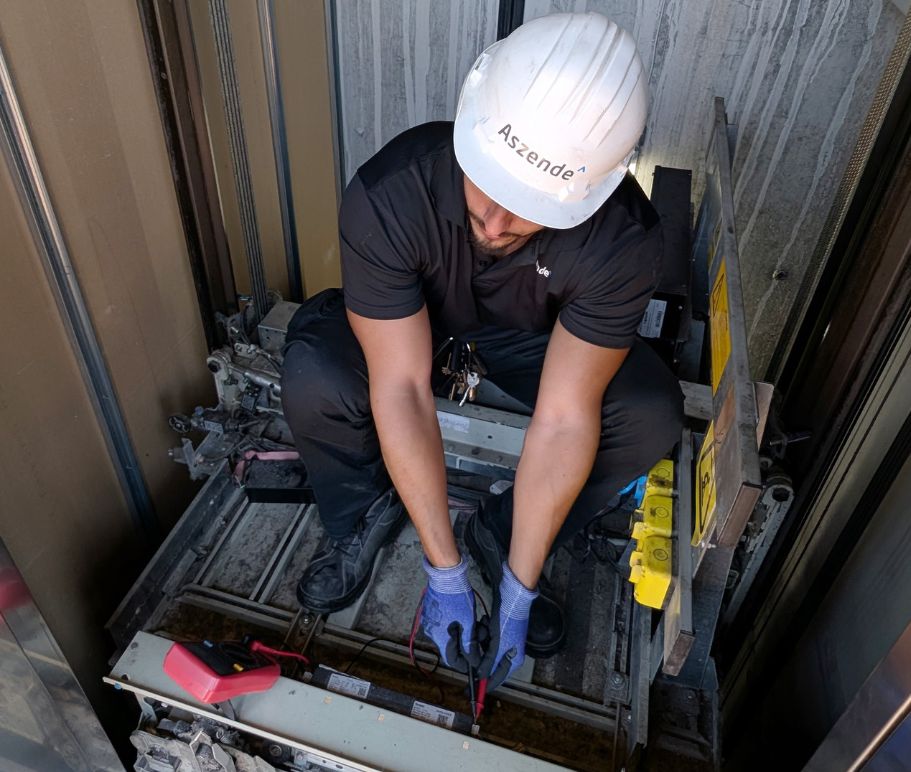
Whether in industrial, public, or residential buildings, elevator inspections are essential to ensure optimal operation and protect the safety of those who use them.
Elevators are part of daily routines, and their constant use can create the false perception that they operate autonomously, without the need for technical inspections. However, behind every ride lies a complex mechanical and electronic infrastructure that requires regular supervision.
In this context, regulatory inspections play an essential role, as they ensure that the elevator maintains appropriate standards of safety, operation, and reliability over time, while also verifying and/or enforcing the applicable regulations for the installation.
What does a regulatory elevator inspection involve?
It is an inspection required by current regulations and carried out by an Accredited Control Body (OCA), aimed at verifying that the elevator is in safe operating condition, taking into account its critical components and its compliance with the technical requirements established by law.
To avoid confusion, it is important to distinguish between two common types of elevator checks: on one hand, there is preventive maintenance carried out periodically by the maintenance company, and on the other, the regulatory inspection itself, conducted by an external and independent body.
For preventive maintenance, minimum on-site elevator checks are established, during which general operation is verified, cleaning is performed, and parts and components are lubricated and adjusted, among other tasks.
Regulatory elevator inspections, although sometimes mentioned in the maintenance contract, are independent of it and assess compliance with current regulations, the elevator’s safety condition, the operation of protection systems, mechanical and electrical conditions, and technical and maintenance documentation. The frequency of these inspections varies depending on the type of building, the elevator’s usage, and the legal requirements applicable in each jurisdiction.
What does this mean? Even if a building’s elevator receives regular maintenance, this does not exempt it from the obligation to undergo the regulatory technical inspection, as both checks serve complementary but distinct purposes.
What elements are checked during an elevator inspection?
You’re probably wondering what is checked during an elevator inspection. Here’s a breakdown. The main elements analyzed during these inspections are the following:
- Brake system: It is essential to ensure that the motor’s mechanical brake is in optimal condition, guaranteeing its holding capacity and proper operation when the cabin comes to a stop.
- Cabin and counterweight: This includes checking the structural condition of the equipment, the hoisting system, the guides, allowable clearances, component wear, and the proper balance between the cabin, its load, and the counterweight.
- Cabin doors, landing doors, and locking devices: The proper functioning of the opening and closing systems is checked. Additionally, interlocking mechanisms and obstacle-detection devices, such as photoelectric barriers or light curtains, are inspected to ensure that the doors do not close while a user is entering or exiting the cabin.
- Shaft and pit safety elements: As part of the elevator inspection process, physical protections, accessibility conditions, the presence of required clearances, and the integrity of associated safety devices, such as safety gears and buffers, are checked. Additionally, the general condition of the pit is assessed, including cleanliness, lighting, and the presence of potential obstructions or leaks that could compromise the elevator’s operation.
- Control panel and control system: Elevator inspections also evaluate the electronic components, wiring, operating devices, electrical protections, and other elements related to the equipment’s control, with the aim of ensuring proper operation and operational safety.
- Cables, pulleys, and suspension systems: During the inspection, the condition of the cables, proper tension, signs of wear or corrosion, the alignment and condition of the pulleys, as well as the lubrication and correct operation of all suspension system components, are checked to ensure the safe transmission of movement and cabin stability.
- Safety gears and speed governors: When assessing technical aspects, the operational condition of the safety gears and speed governor is also evaluated, verifying their ability to activate correctly in the event of acceleration beyond normal parameters.
- Signage and control panels: This includes checking light indicators, internal and external signage, operating buttons, and accessibility devices for people with reduced mobility.
- Emergency lighting: In the event of electrical faults or other emergencies, the system must provide minimum visibility. During the inspection, the condition and autonomy of the emergency lighting are checked to ensure it functions for the necessary time to allow safe evacuation.
- Alarm system and two-way communication: It is essential to ensure that users can communicate with a rescue service and receive assistance in the event of an unexpected stoppage.
When should elevator inspections be carried out?
After understanding what an elevator inspection involves and which elements are checked, it is essential to know how often it should be carried out; this depends on the building’s characteristics, the equipment’s usage, and its level of wear and tear.
According to ITC AEM 1, inspections must be carried out, at a minimum, within the following timeframes:
- Elevators installed in industrial buildings or in public-access locations: Every two years.
- Elevators in buildings with over twenty residential units, or serving more than four floors: Every four years.
- Elevators not included in the previous cases: Every six years

Reasons to comply with elevator inspection requirements
If you still have doubts about the importance of carrying out elevator inspections, we share three key reasons to ensure compliance:
Operational safety: From an operational standpoint, complying with elevator inspections helps prevent faults that could compromise the safety of users and the technical staff responsible for their maintenance.
Legal compliance: Carrying out the mandatory inspection prevents owners or property managers from facing financial penalties, elevator shutdowns, or liabilities due to regulatory non-compliance.
Incident prevention: Thanks to inspections, it is possible to detect anomalies or wear that could lead to breakdowns, operational failures, or service interruptions.
How can an elevator inspection be carried out correctly?
This is the key question, and the answer requires considering several factors. To carry out inspections properly, it is essential to work with companies specializing in maintenance and regulatory inspections, with extensive experience in ITC regulations and the required technical procedures.
Aszende is one such company. Their expertise in elevator systems, combined with continuous updates on legal requirements, ensures that each installation meets technical standards, preventive measures are properly applied, and all findings from the inspection can be appropriately addressed.
Ensuring proper elevator inspections is essential to protect users and maintain the operational continuity of the equipment. Having certified specialists is crucial for carrying out a safe inspection in compliance with current regulations.
We can help you
Would you like to know more about our products, services and vertical mobility solutions?
Do not hesitate and contact us without any obligation using this form and we will contact you as soon as possible.
If you want to know more about the treatment of your data, please visit our privacy policy.


