
 MiAszende
 Request a quotation


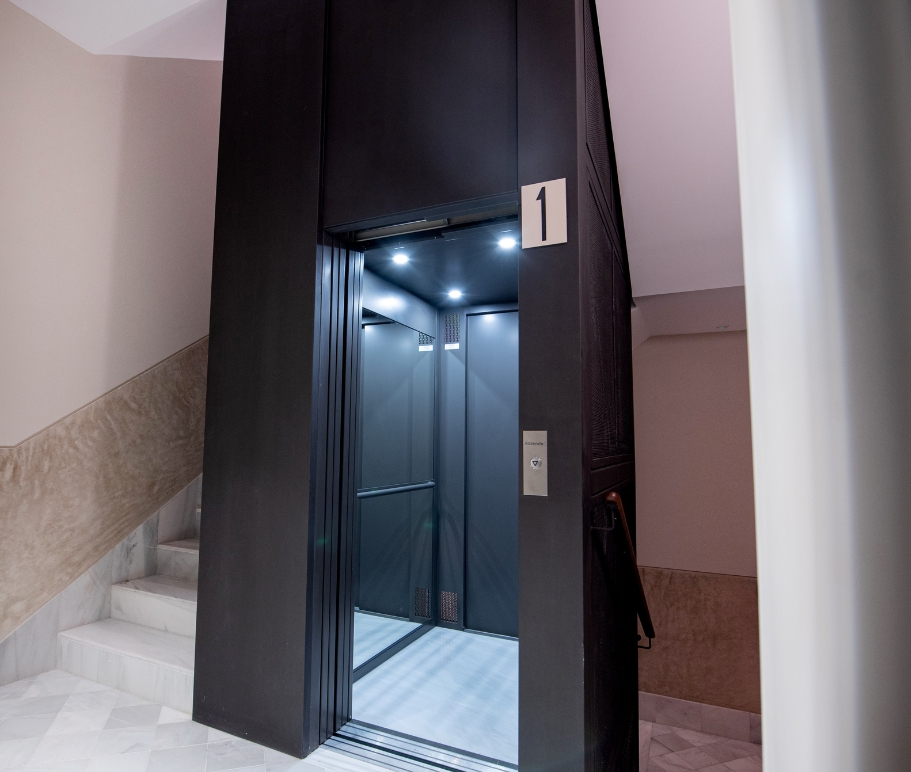
Have you ever wondered what elevators will look like in ten years? Although they are already part of our daily lives, these systems are undergoing significant changes.
Have you ever wondered what elevators will look like in ten years? Although they are already part of our daily lives, these systems are undergoing significant changes.
But which advances are shaping the industry’s direction? Let’s explore the main regulatory and technological developments, along with the challenges that will define its future.
How Is the Elevator Industry Evolving?
The elevator industry has evolved considerably over the past few decades. Today’s elevators incorporate more advanced control systems and technologies that improve their operation while making everyday mobility easier.
In Spain, one of the major challenges is adapting existing installations to current needs, as many buildings have older elevators that, although still operational, may require upgrades to improve their performance.
For example, a homeowners’ association can upgrade the control system or improve the leveling accuracy of the elevator car without necessarily replacing the entire elevator.
These modernization opportunities represent significant potential for the elevator industry, especially given the growing demand for more accessible, efficient, and safer buildings.
The Elevator Industry Today: Regulations and Technology
Regulatory changes and technological advances are transforming the way elevators are installed and maintained. Understanding these developments is essential for homeowners’ associations and building managers to make informed decisions about their installations.
New safety requirements in Spain: One of the most significant regulatory changes for the elevator industry was the entry into force, on July 1, 2024, of Complementary Technical Instruction ITC AEM 1, approved under Royal Decree 355/2024. This regulation governs elevator maintenance and inspections in Spain and establishes safety improvements for certain existing installations.
These measures include correcting leveling problems and installing two-way communication systems in elevator cars that do not already have them.
What Do European Regulations Establish?
The elevator industry must also comply with European provisions governing equipment safety.
Directive 2014/33/EU establishes the essential safety requirements for elevators and their components placed on the European Union market. These provisions were incorporated into Spanish legislation through Royal Decree 203/2016.
Thanks to this common regulatory framework, manufacturers and installers have shared criteria for assessing product conformity and ensuring compliance with applicable requirements before products are placed on the market.
Digitalization and Predictive Maintenance
What if certain faults could be detected before an elevator stops working? This is one of the possibilities offered by digitalization.
Today, some elevators incorporate sensors and monitoring systems that help collect operational data and detect abnormal behavior.
For example, increased vibrations or changes in door opening times could indicate that a component requires inspection.
This information helps technicians plan maintenance interventions and reduce the risk of unexpected breakdowns, complementing mandatory on-site inspections.
As a result, predictive maintenance is becoming an increasingly relevant tool for the elevator industry, especially in buildings with high passenger traffic.
What Trends Will Shape the Future of the Elevator Industry?
The industry will continue to evolve over the coming years, with solutions designed to improve equipment performance and respond to changing mobility needs.
These are some of the trends gaining importance:
More energy-efficient elevators: Reducing electricity consumption is one of the industry’s main challenges, particularly in buildings where elevators operate continuously.
To address this, manufacturers are incorporating LED lighting and standby systems that reduce energy consumption when elevators are not in use.
Regenerative technologies are also available, capable of recovering some of the energy generated during certain elevator movements.
For example, in an office building with several elevators, these solutions can help reduce energy costs. The actual savings will depend on the installed model and frequency of use.
Greater accessibility in existing buildings: Accessibility will remain a priority for the elevator industry, particularly in older buildings with architectural barriers.
In many cases, homeowners’ associations need to adapt their installations to make mobility easier for elderly people or those with reduced mobility.
In practice, this may involve installing an elevator where none previously existed or modernizing an older one to improve accessibility.
Appropriately sized elevator cars and accurate leveling systems are among the solutions that can help create more accessible spaces.
Connected elevators and smart buildings: Integrating elevators with smart building systems is another growing trend.
These technologies make it possible to access information about equipment operation and facilitate maintenance management.
In buildings with multiple elevators, control systems can also coordinate elevator calls to distribute passenger traffic more efficiently among the cars.
For example, in a busy business center, efficient traffic management can help reduce waiting times.
Modernization of older elevators: Upgrading existing installations will be another major challenge for the industry. Although an older elevator may still operate correctly, some of its components may need updating to improve safety and performance.
In certain cases, replacing the elevator controller or installing a variable frequency drive can improve movement control without replacing the entire system. However, before carrying out any work, it is essential to assess the installation’s characteristics and verify the compatibility of new components.

Aszende and the Future of the Elevator Industry
The future of the elevator industry will be shaped by technological innovation and new regulatory requirements. In this context, working with specialized professionals will be essential to adapt installations and take advantage of the opportunities offered by the industry.
At Aszende, we have a specialized technical team that understands the needs of each installation and provides multi-brand maintenance and modernization solutions to improve equipment safety and performance.
Want to prepare your installations for the future? Contact Aszende and discover how we can help you implement improvements that address the new challenges facing the elevator industry.
We can help you
Would you like to know more about our products, services and vertical mobility solutions?
Do not hesitate and contact us without any obligation using this form and we will contact you as soon as possible.
If you want to know more about the treatment of your data, please visit our privacy policy.


