
 MiAszende
 Request a quotation


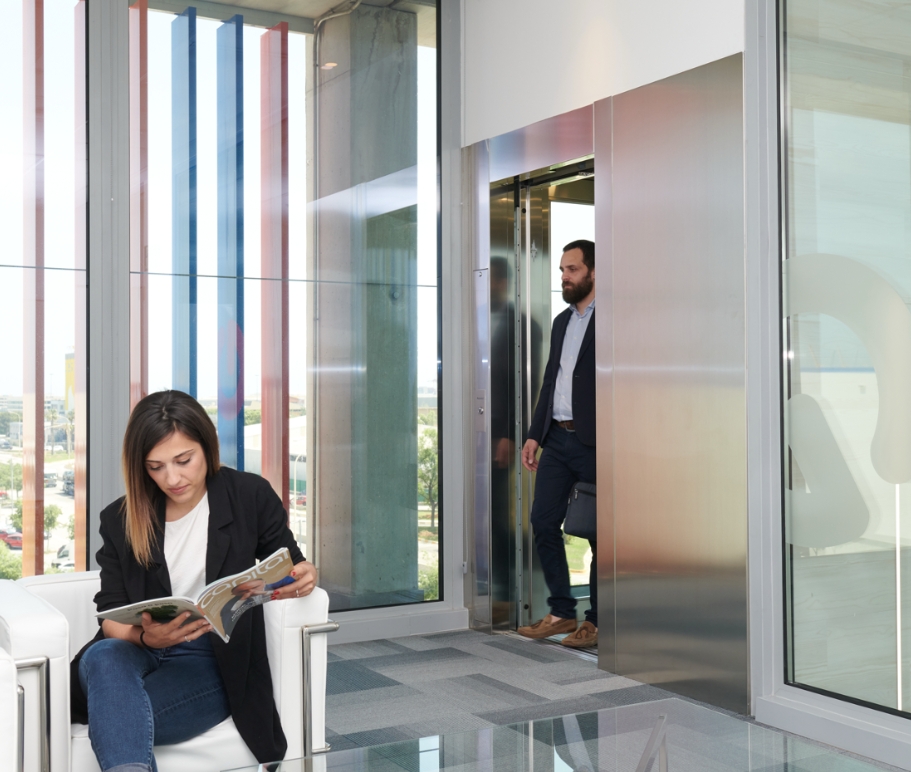
Office elevators have an impact on the daily experience of those who work in or visit a building. A slow or insufficient elevator system can result in long waiting times.
This is particularly noticeable during peak periods, such as at the beginning and end of the working day.
Factors to consider when sizing elevators for offices
Office elevators must be able to handle the building’s daily traffic. Before choosing an elevator system, a traffic analysis should be carried out. It is also important to identify the times when demand is highest.
The most important factors to assess include:
- Number of employees and regular users
The number of people using the building is the starting point. An office with twenty people does not have the same requirements as a tower housing several companies. This figure can be used to estimate how many trips the system needs to handle and the capacity required for each cabin. Visitors, suppliers and external personnel must also be taken into account.
- Number of floors
The height of the building directly affects the duration of each trip. Each additional floor increases the distance traveled. Stops also add seconds to the total journey time. In taller buildings, these times can add up and increase waiting times for people who need to reach the upper floors.
In an office building with only a few floors, travel distances are shorter. A moderate speed may be sufficient to provide an efficient service. Taller buildings, however, require faster elevators. This reduces travel times and prevents waiting times from building up.
- Distribution of users by floor
Not all floors experience the same level of traffic. A reception area concentrates the arrival of visitors and suppliers. A meeting room can generate several trips within a few minutes. In contrast, an office area usually maintains a more consistent flow throughout the working day.
This difference affects how office elevators are used. If many people travel to the same floor during specific periods, the system must be able to handle that volume without significantly increasing waiting times.
- Entry, exit and peak hours
Work schedules completely change the pattern of vertical traffic. Early in the day, many people travel upward from the entrance to their workplaces. At the end of the afternoon, this flow is reversed.
Peak periods are not always limited to these two times. They can occur before a meeting, during the lunch break or at the end of an event. Identifying these peaks helps to determine the appropriate capacity for office elevators.
- Inter-floor traffic
In some buildings, users frequently move between departments. This occurs, for example, when meeting areas are located on a different floor from their workspaces.
Inter-floor traffic should be analyzed separately. An elevator designed only for travel to and from the entrance may not be sufficient. The installation must accommodate the usual travel patterns within the building.
- Cabin capacity and number of elevators
The cabin should be sized according to the type of building, its use and its traffic requirements. A small cabin may work well in a building with low traffic. In a busy office building, however, the same cabin could lead to queues.
The number of elevators is also a key factor. Two office elevators can distribute traffic more effectively than a single unit. They also provide an alternative when one of the elevators is undergoing maintenance.
- Elevator speed
Speed affects the duration of each journey. In an office building with only a few floors, a moderate speed can provide an efficient service. However, in taller buildings, journeys are longer and each stop adds to the total travel time.
In these cases, a faster elevator helps reduce journey times, allowing it to return sooner to the floors with the highest demand and preventing waiting times from building up.
- Average waiting time
Waiting time begins when a person presses the call button and ends when the elevator doors open.
When waiting times are frequently long, people gather in front of the elevator, creating queues and delaying their arrival at their workstations, meetings or other areas of the building. Measuring waiting times helps determine whether the elevator system is adequately handling the volume of users.
- Travel time
Travel time begins when the user enters the elevator cabin. It includes the journey to their floor and any stops made along the way.
This figure does not always correspond directly to elevator speed. A fast elevator may take longer if it has to stop at several floors. Therefore, travel time provides a better indication of how the system performs during actual building use.
Accessibility and available space
Accessibility must be considered from the design stage. The cabin should provide comfortable access for people with reduced mobility. Doors and landings must also provide sufficient space.
The building may have space limitations that affect the solution. In these cases, the dimensions of the cabin, doors and shaft are assessed. A preliminary evaluation makes it possible to select office elevators that are suitable for the building.
How to choose the most suitable solution
Now that you know which factors to analyze when sizing office elevators, it is time to define the characteristics of the installation.
- Determine the performance the building requires
The volume of trips determines the capacity required for each cabin. It also indicates whether a single elevator can meet demand or whether the building requires additional units.
Building height affects the required speed. In an office building with only a few floors, a moderate speed may be sufficient. In a tall building, a faster elevator helps reduce travel time.
- Consider user safety
The installation must provide comfortable and safe access. The doors require locking systems. The cabin must include a means of communication for emergencies.
Regular inspections also help detect faults and keep the equipment in good condition.
- Assess the elevator’s energy consumption
Modern elevators can incorporate LED lighting and standby mode. These features reduce energy consumption during periods of lower use. In some buildings, modernization can improve performance without replacing the entire installation.

ASZENDE helps you choose the right solution
Choosing an elevator does not end with purchasing or installing the equipment. It also involves determining how it will be maintained and how it will meet the building’s needs over time.
At ASZENDE, we support every project from the initial technical visit through to commissioning. Our specialized team can determine whether the building requires a new installation, modernization or a maintenance plan.
This expert guidance allows you to make a decision with a complete overview of the project. This way, your company can invest in office elevators with greater confidence and technical support. Contact us!
We can help you
Would you like to know more about our products, services and vertical mobility solutions?
Do not hesitate and contact us without any obligation using this form and we will contact you as soon as possible.
If you want to know more about the treatment of your data, please visit our privacy policy.


