
 MiAszende
 Request a quotation


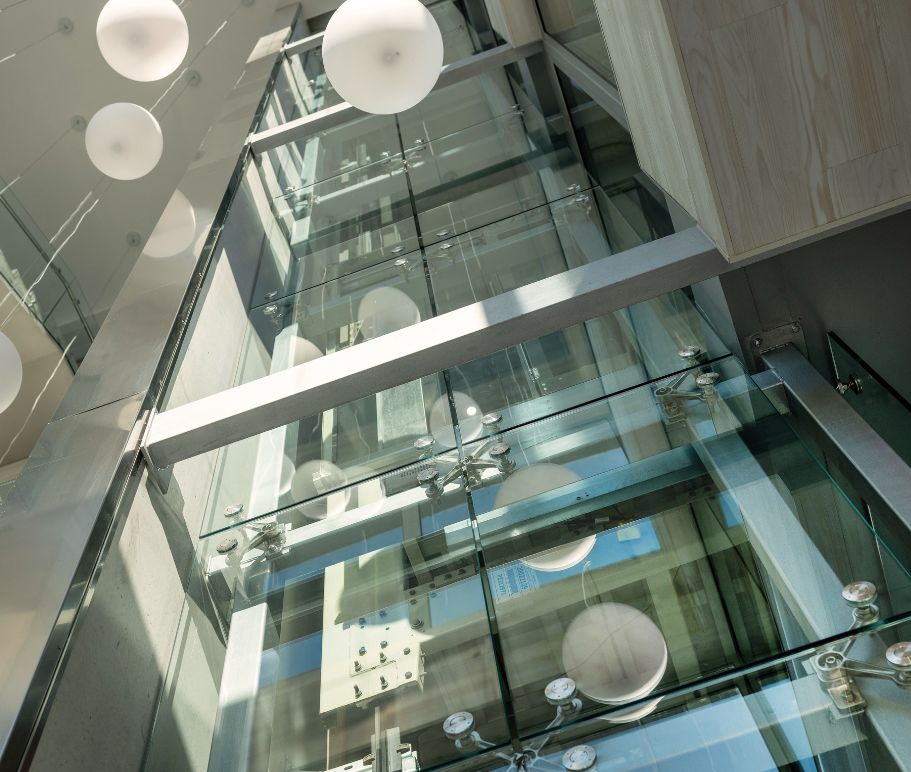
Panoramic elevators are lifting systems whose cabin incorporates one or more glass sides, allowing passengers to observe the exterior or the building’s surroundings during travel between floors.
In contrast to traditional elevators, where the cabin remains closed and visually isolated, panoramic elevators incorporate glass surfaces that allow the lifting system to be integrated into the building’s architectural design and to take advantage of natural light.
This type of solution frequently appears in buildings where vertical movement is also part of the user experience. High-rise hotels, shopping centers, or corporate buildings incorporate panoramic elevators that allow users to enjoy views of the interior atrium or the urban surroundings while traveling.
Main characteristics of panoramic elevators
The incorporation of glass surfaces introduces a series of technical and aesthetic characteristics that differentiate panoramic elevators within the lifting industry.
Structure with laminated safety glass: The cabin and, in some cases, the external enclosure incorporate laminated glass designed to provide strength and protection during operation. This type of glass withstands impacts, temperature variations, and structural loads, complying with the safety standards required in lifting installations.
Architectural integration in the building: Panoramic elevators are part of the building’s design from the project planning phase. Architects and engineers consider their presence as a visible element within the overall architectural composition.
Cabins with a strong aesthetic component: The transparency of the glass, combined with metallic finishes or interior lighting, creates a more open perception of space and enhances the experience during travel.
Visible or semi-visible structures: Structural elements, guides, or mechanical components can be integrated into the design, providing a modern and technological aesthetic.
Indoor or outdoor installation: Panoramic elevators can be installed داخل the building or attached to its façade, allowing them to adapt to different architectural configurations.
Types of panoramic elevators according to their location and configuration
The European market offers different types of panoramic elevators, adapted both to the functional needs of the building and to the architectural design of the project.
Among the most representative configurations are the following:
External panoramic elevators attached to the façade: This installation is located on the exterior of the building and is fixed to one of its façades through a glazed structure. The visibility of the elevator makes it a prominent architectural element within the overall building.
Indoor panoramic elevators in atriums or lobbies: High-rise atriums and lobbies provide suitable spaces to integrate panoramic elevators in the building. In this context, the elevator adds dynamism to the space and enhances the architectural design.
Circular or semicircular panoramic elevators: The curved design provides a distinctive aesthetic and a strong visual presence within the building. The cabin incorporates curved glass surfaces that expand the field of view during travel. This configuration requires a specific technical design to adapt both the cabin and the elevator shaft to the circular or semicircular geometry.
Square or rectangular panoramic elevators: Within panoramic installations, this configuration represents the most widespread solution. The rectangular shape facilitates integration with the building structure and allows for greater flexibility during the installation process.
Installations in shopping centers, hotels, and corporate buildings: Panoramic elevators frequently appear in buildings where vertical mobility coexists with spatial design. Shopping centers incorporate these elevators in atriums or central areas to facilitate movement between floors and improve visitor orientation within the building. Hotels and corporate buildings use panoramic elevators as part of their architectural identity.
Solutions for homeowners’ associations: The installation of panoramic elevators is also an attractive option in residential buildings where available space is limited. The transparency of the glass helps maintain the entry of natural light in the building’s common areas. Staircases or interior courtyards can incorporate this type of elevator without creating a sense of visual clutter.
Advantages of panoramic elevators
The incorporation of panoramic elevators provides various benefits related to design, spatial perception, and user experience. Among the main ones are the following:
Aesthetic contribution: The glass structure turns the elevator into a distinctive element within the building. Transparency, brightness, and visual lightness help reinforce the architectural character of the property.
Greater brightness during travel: Glass allows natural light to enter the cabin, creating a brighter environment during movement between floors.
Sense of spaciousness: The transparency of the material reduces the perception of a confined space inside the cabin and enhances user comfort during the journey.
Customized architectural integration: The design of panoramic elevators allows them to be adapted to the architectural style of the building. Contemporary projects and the renovation of historic buildings incorporate customized solutions to maintain the aesthetic coherence of the environment.
Added value in commercial or tourist spaces: Hotels, shopping centers, and landmark buildings integrate panoramic elevators as part of the visitor experience.
Aspects to consider before installing panoramic elevators
If you are considering installing panoramic elevators in your property, it is important to analyze various technical and construction factors that may influence the design, installation, and operation of the system. Some of them are:
Elevator location: The installation can be carried out inside the building or attached to the façade. Each option involves different structural solutions and affects aspects such as climate exposure or architectural integration.
Building structural conditions: The building structure must support the weight of the lifting system, the cabin, and the glazed enclosures. Some renovation projects require structural reinforcements.
Orientation and solar exposure: Orientation influences the cabin temperature when the elevator is installed outdoors. Studying solar exposure helps optimize thermal comfort.
Maintenance and cleaning: Glass surfaces require regular cleaning to maintain the elevator’s visibility and aesthetics.
Regulations and safety: All panoramic elevator installations must comply with current regulations regarding safety, accessibility, and maintenance.

Panoramic elevators: design, technology, and functionality
The evolution of panoramic elevators reflects the integration of engineering, architecture, and user experience. Their presence within the building adds aesthetic value without compromising the functionality of the lifting system.
The guidance of specialized professionals allows the development of solutions tailored to each project, ensuring safety, efficiency, and regulatory compliance.
Companies with experience in the lifting industry, such as Aszende, offer maintenance, modernization, and technical consulting services for panoramic elevator installations, ensuring the proper functioning of these systems over time. Would you like to learn more about our panoramic elevators? Contact us!
We can help you
Would you like to know more about our products, services and vertical mobility solutions?
Do not hesitate and contact us without any obligation using this form and we will contact you as soon as possible.
If you want to know more about the treatment of your data, please visit our privacy policy.


