
 MiAszende
 Request a quotation


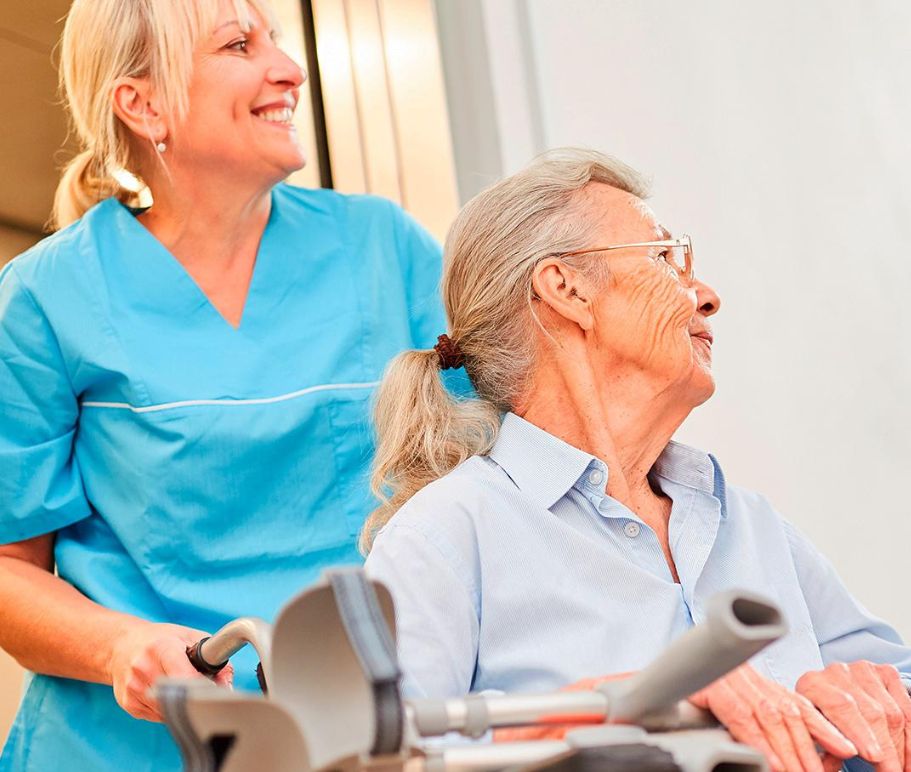
Choosing lifts for elderly care homes can be a complex task if all the factors that truly affect the day-to-day running of the centre are not taken into account. In fact, it is a fundamental part of the infrastructure that supports care operations, as it determines safety during movement, accessibility between floors and the level of comfort offered to residents during each transfer.
In these types of environments, choosing the right system must respond both to technical parameters and to compliance with current regulations on accessibility and safety.
In addition, from a demographic perspective, in Spain more than 20% of the population is over 65 years old (INE, updated 2024-2025 data), a reality that increases the demands placed on this type of installation.
In this scenario, defining the right criteria for choosing lifts for elderly care homes becomes a key decision to ensure an efficient and safe care service.
Criteria for correctly choosing lifts for elderly care homes
The first thing to bear in mind is that, although the choice of lifts for elderly care homes may vary according to each centre’s needs, the most important thing is to ensure a system that accurately meets the safety, accessibility and comfort standards required in a care environment.
Generally, lifts for elderly care homes are designed with sufficient dimensions to allow stretcher transport, provided that the available shaft space in the building allows it.
In this regard, it is essential to consider aspects such as:
Accessibility regulations applicable in Spain:
In the case of lifts for elderly care homes, regulatory compliance regarding accessibility is mainly governed by the Spanish Technical Building Code (CTE), through Basic Document SUA (Safety of Use and Accessibility), as well as by Royal Decree 173/2010, which establishes the basic conditions for accessibility and non-discrimination in the access to and use of buildings.
The criteria established by these regulations include minimum cabin dimensions that allow wheelchair access, adequate door passage widths, precise levelling between the cabin and the floor, accessible control panels with visual and tactile signage, as well as acoustic information systems that facilitate the use of the lift in safe and autonomous conditions.
Lift safety requirements (EN 81, inspections, emergency systems):
Safety is the central pillar of lifts for elderly care homes. For this reason, European standards, such as EN 81, establish strict requirements that include:
- Automatic rescue systems in the event of any electrical failure.
- Permanent two-way communication inside the lift, connected to a support centre or to the building staff, ensuring immediate assistance in the event of an incident.
- Door safety sensors to detect obstacles and prevent entrapment during opening or closing.
- Maintenance programmes and periodic inspections to ensure the correct operation of the equipment.
Load capacity and cabin dimensions adapted to stretchers and wheelchairs:
This is a determining criterion when selecting lifts for elderly care homes. These systems must be sized to allow the safe and smooth transport of wheelchairs, stretchers and care staff without compromising manoeuvrability inside the cabin. In turn, the load capacity must be above residential standards, usually starting from 1,000 kg.
Speed and precise stop levelling:
Stopping precision is a critical requirement in lifts for elderly care homes. Levelling must be millimetric and consistent in every cycle, even with load variations, avoiding any difference in level between the cabin and the floor that could compromise user safety.
Automatic door opening and closing systems:
This criterion responds to the need for doors to operate with high precision, allowing safe and effortless access for elderly users.
Hygienic and resistant interior materials:
Care environments require materials that are easy to clean and resistant to continuous use. Lifts for elderly care homes must incorporate antibacterial surfaces and durable finishes.
Communication and alarm system:
The equipment must include communication and alarm systems that are operational at all times, so that in the event of any incident, immediate contact can be established with the centre’s staff or with an external assistance service.
Energy efficiency and consumption:
Energy efficiency is an increasingly relevant criterion when selecting lifts for elderly care homes, especially in installations with continuous use. For this reason, it is advisable to incorporate technological solutions that optimise consumption without compromising the equipment’s performance.
Integration with building control systems:
Lifts for elderly care homes can be integrated with control systems to monitor their status and improve daily operations.
Adaptation to new construction or modernisation:
It is essential that lifts for elderly care homes can be adapted both to new-build properties and to modernisation processes, where the available space determines the technical solution.
Features and solutions to ensure comfort and user experience
Are technical requirements the only aspects to consider when choosing lifts for elderly care homes? The answer is no. It is also necessary to ensure that the equipment is capable of providing a comfortable user experience, both for elderly people and for the centre’s professionals.
For example, ergonomics is a key factor. Control panels must be located at an accessible height and include large buttons. Likewise, signage must be clear to make the lift easier to use and reduce dependence on staff.
It is also recommended that lighting in lifts for elderly care homes be uniform, as this helps eliminate shadows or glare.
Another essential element is smooth movement. Modern systems allow this equipment to start and stop progressively, without sudden movements that may cause discomfort.
Noise control also adds value. Lifts for elderly care homes must operate with reduced acoustic levels, contributing to a calmer environment within the centre.
However, from an operational point of view, these systems improve staff efficiency, as they allow them to:
- Manage transfers more effectively.
- Reduce waiting times.
- Facilitate the organisation of daily activities.
Likewise, the incorporation of smart technology adds an additional layer of efficiency. Lifts for elderly care homes help optimise routes, prioritise movements and adapt to the centre’s dynamics.

Why choosing an expert provider in lifts for elderly care homes makes the difference
The implementation of lifts for elderly care homes requires a high level of technical specialisation, regulatory knowledge and experience in care environments. Working with a specialised provider such as Aszende allows each project to be approached from a comprehensive perspective, taking into account both the building’s conditions and the actual use of the system.
Aszende has its own remote monitoring system that makes it possible to check the status of the lift 24 hours a day, 365 days a year. This makes it possible to anticipate faults before they occur or carry out remote rescues when the incident allows it.
In addition, experience in this type of installation makes it possible to anticipate needs, optimise equipment performance and ensure adequate long-term maintenance, key factors in environments where service continuity is essential.
If you are assessing the installation or modernisation of lifts for elderly care homes, relying on specialised professionals is the first step towards ensuring a safe and efficient solution.
We can help you
Would you like to know more about our products, services and vertical mobility solutions?
Do not hesitate and contact us without any obligation using this form and we will contact you as soon as possible.
If you want to know more about the treatment of your data, please visit our privacy policy.


