
 MiAszende
 Request a quotation


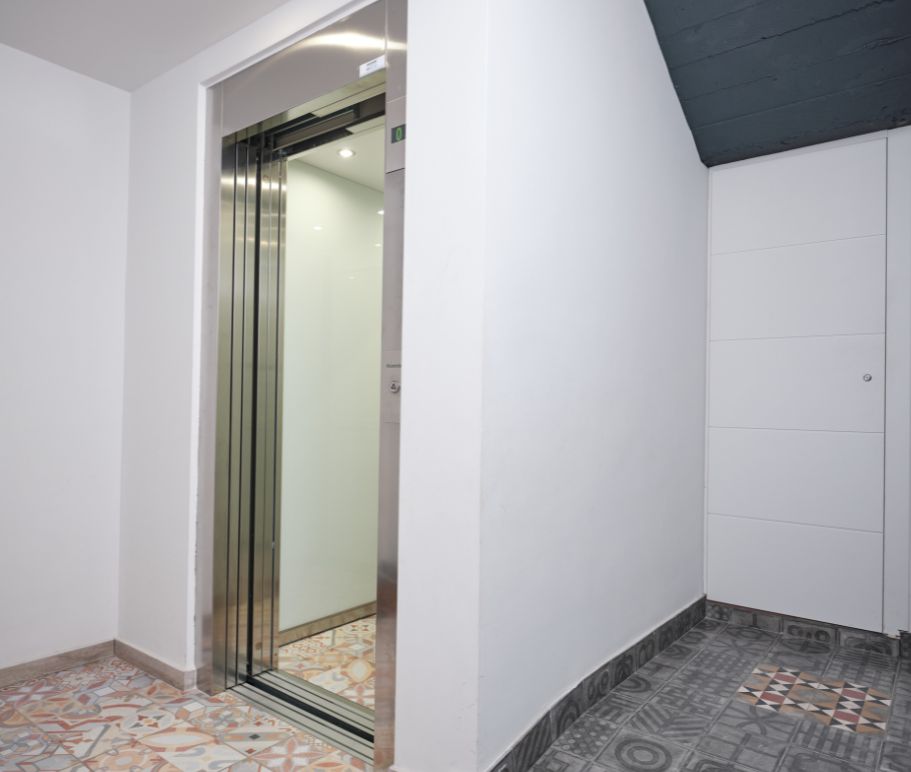
Is it possible to install a lift in a home with limited space? A few years ago, the answer would have been much more limited. However, technological advances in the sector have completely transformed this scenario.
Today, lifts for small homes have become an increasingly common solution in Spain, making it possible to improve accessibility and quality of life without the need for major building work or large spaces.
Types of lifts for small homes and the most commonly used solutions
Today’s market offers multiple lift alternatives for small homes, with specific features that allow them to adapt to different needs and architectural layouts. The most common are:
Compact electric lifts
Compact electric lifts are one of the most in-demand solutions in private homes. They use traction systems that optimise the available space and offer quiet, precise and efficient operation.
Hydraulic lifts for homes
They continue to be a widely used option in single-family homes with few floors, as they stand out for offering smooth and comfortable movement, especially over short distances.
Vertical lifting platforms
When the available space is limited, these platforms represent an effective solution. They are mainly designed to improve accessibility and can be installed with minimal building work.
Mini domestic lifts
Mini domestic lifts have gained popularity in recent years thanks to their reduced size. Some models can be installed in shafts of less than one square metre, making it possible to make use of unused spaces within the home.
Machine-room-less lifts
This is one of the sector’s greatest innovations. By integrating the technical components within the lift shaft itself, the need to allocate an additional room for the machinery is eliminated. This makes better use of the available space and facilitates the integration of the lift into homes with reduced dimensions.
Compact panoramic lifts
Panoramic lifts stand out among the range of lifts for small homes. Thanks to their glazed enclosures, they create a visual sense of spaciousness and bring brightness to the surroundings.
Solutions for duplexes and single-family homes
Lifts for small homes can be perfectly adapted to duplexes, semi-detached houses and single-family homes. Depending on the layout, they can be installed in stairwells, interior courtyards or outdoor areas attached to the home.
Lifts for people with reduced mobility
These solutions allow elderly people or people with reduced mobility to move safely between the different floors of the property, supporting their independence and quality of life.
Low energy consumption systems
Today, many domestic lifts incorporate LED lighting systems, automatic standby modes and high-efficiency motors, helping to considerably reduce electricity consumption compared to older technologies and contributing to a more sustainable home.
Indoor and outdoor installation options
Another advantage of lifts for small homes is their installation flexibility. Depending on the characteristics of the property, they can be located both inside and outside the home, significantly expanding the adaptation possibilities.
What features allow a lift to be adapted to reduced spaces?
The possibility of installing lifts in small homes is due to several technical advances. These include the reduction in motor size, the elimination of the machine room, the decrease in shaft requirements and the manufacture of compact cabins.
These elements make it possible to make better use of the available space without compromising safety or ease of use.
Aspects to consider before installing a lift in a small home
Before choosing between the different lift options for small homes, it is important to carry out a technical analysis to determine which solution is best suited to the needs of the property. The main aspects to take into account are the following:
Home layout
The interior layout determines the location of the lift. It is important to study the routes between floors and passage areas to ensure efficient integration.
Available space for installation
The available dimensions are one of the most important factors. A preliminary study will make it possible to identify the system that best adapts to the characteristics of the property.
Type of property structure
Each home has different construction characteristics. The structural characteristics will influence the feasibility of the installation and the type of lift recommended.
Accessibility needs
Not all homes have the same needs. The presence of elderly people or people with reduced mobility may require specific solutions.
Regular use of the lift
The frequency of use also directly influences the choice of technology and the most suitable components to ensure a long service life.
Number of people in the home
The number of users determines the capacity and size of the cabin required to offer a comfortable and functional experience.
Available budget
The cost of the installation may vary depending on the technology chosen, the work required and the specific characteristics of the project.
Energy consumption
Energy efficiency is an increasingly valued aspect. Choosing low-consumption models helps reduce long-term operating costs.
Necessary building work
One of the major advances in the sector is the reduction of the building work required. Many lifts for small homes can be installed with minimal interventions, reducing installation times and inconvenience for owners.
Regulations and permits
Every installation must comply with current Spanish regulations on safety and accessibility, including Royal Decree 88/2013, which regulates the commissioning and maintenance of lifts, as well as Standard UNE-EN 81-41 for vertical lifting platforms and the accessibility regulations applicable in each autonomous community.
In addition, depending on the characteristics of the project, it may be necessary to obtain a building licence or submit a prior municipal notification, as well as provide the corresponding technical documentation.
Advantages of domestic lifts in homes with limited space
The installation of lifts for small homes provides benefits that go far beyond accessibility. These solutions improve everyday comfort, optimise the use of the home and support the independence of residents, especially in multi-storey homes.
In addition, having a lift can increase the value of the property by making it a more functional home.
On the other hand, current models combine safety, energy efficiency and design, allowing the lift to be integrated harmoniously into the home without compromising the available space or the aesthetics of the surroundings.

Is it possible to install lifts for small homes without compromising safety, design and functionality?
The answer is yes. Thanks to technological advances and the development of increasingly compact solutions, lifts for small homes represent a viable alternative for a growing number of homes in Spain.
However, to obtain the best results, it is essential to analyse aspects such as the layout of the home, the available space, accessibility needs and the expected use of the lift.
With the advice of specialised professionals, lifts for small homes can become a strategic investment that guarantees an efficient and long-lasting solution.
We can help you
Would you like to know more about our products, services and vertical mobility solutions?
Do not hesitate and contact us without any obligation using this form and we will contact you as soon as possible.
If you want to know more about the treatment of your data, please visit our privacy policy.


