
 MiAszende
 Request a quotation


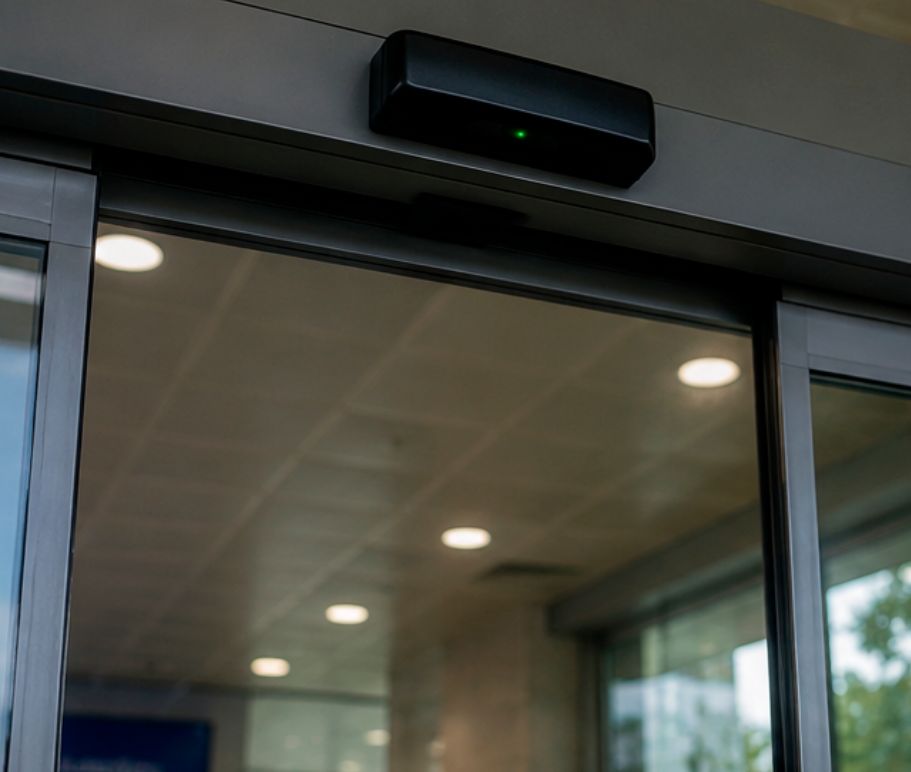
How do automatic door sensors work? This is an increasingly common question. Automatic doors are found in residential buildings, offices, shops, hospitals, and many other facilities. However, few people know what technology allows them to open at exactly the right moment and operate safely.
How automatic door sensors work
To understand how automatic door sensors work, you first need to know how an automatic door operates as a whole. Although the motor is the most visible component, it is not responsible for making decisions. That task belongs to the sensors.
Essentially, these devices detect everything that happens around the entrance and send the information to the control unit. Based on this data, the system determines whether the door should open, how long it should remain open, or when it is safe to start closing.
Put simply, when the system detects movement, the sensors send a signal so that the door reacts immediately.
How automatic door sensors work according to the technology used
Not all sensors perform the same function. Some are designed to trigger the door opening, while others are intended to prevent accidents during the door’s movement.
Today, these are the most commonly used technologies:
Motion sensors: They provide the first warning that someone is approaching the automatic door. Just as a person turns their head when they see someone coming, these sensors detect movement within their range and send the command for the door to start opening before the user reaches the entrance.
Presence sensors: If motion sensors detect that someone is approaching, presence sensors make sure they have completely passed through. As long as they detect a person or an obstacle in the passage area, they keep the door open to prevent unexpected closing.
Infrared sensors: They are the automatic door’s invisible eyes. If you’ve ever wondered how automatic door sensors work, this technology is a great example. Although the human eye cannot see them, they emit infrared beams capable of detecting the presence of people or objects.
Safety photocells: They act as the automatic door’s reflexes. They create an invisible barrier between two points and react whenever they detect movement. Their response is immediate: they stop the closing movement to prevent impacts or entrapment.
Safety edges: They perform the sense of touch. Installed along the moving edges of the door, they react when they come into contact with people or obstacles during the closing operation.
Magnetic sensors: Just as a compass helps maintain direction, these sensors tell the door exactly where it is at any given moment. In fact, how automatic door sensors work also depends on this technology, as it confirms that every opening and closing cycle has been completed correctly.
Laser sensors: They create highly accurate three-dimensional maps of the surrounding area, distinguishing between people, vehicles, and other obstacles. They are commonly used in smart buildings and high-security access points.
Pressure sensors: They detect the weight applied to a specific surface and activate the door when a predefined threshold is exceeded.
Sliding door sensors: Sliding doors combine motion and presence sensors to ensure fast opening and safe closing. They are commonly found in supermarkets, hospitals, hotels, and office buildings, where there is a constant flow of people.
Swing door sensors: Because swing doors open by rotating, they need to monitor the entire sweep area of the door leaf. These sensors detect any person or obstacle within the door’s path. They are commonly installed in residential buildings and public facilities.
Garage door sensors: Understanding how automatic door sensors work also means knowing the systems used in garage doors. Photocells, magnetic detectors, and pressure sensors work together to monitor access, detect vehicles or pedestrians, and prevent the door from closing when an obstacle is present.
What can affect the performance of door sensors?
Door sensors are designed to provide reliable and accurate performance for many years. However, like any other component of an automatic door, they also require regular maintenance. In fact, how automatic door sensors work depends not only on the technology they use, but also on their condition and proper calibration.
When any of these components develops a fault, it is common for issues such as the following to appear:
Door opening for no apparent reason: The door activates even when there is no one in the detection area.
Failure to detect people: The sensor does not correctly identify a person passing through.
Closing too quickly: The door starts closing before the passage is completely clear.
Incomplete closing: The operating cycle is interrupted before the door completes its movement.
Undetected obstacles: The system fails to recognize the presence of a person or an object.
Misaligned sensors: Incorrect positioning reduces the sensor’s detection capability.
Dirty photocells: Dust or dirt can interfere with the sensor’s readings.
Wiring faults: A faulty electrical connection can cause operating errors.
Incorrect sensitivity settings: Improper configuration can result in unnecessary door openings or a lack of response.
Wear from continuous use: Over time, continuous operation can affect the accuracy of certain components.
Control unit failures: The system is no longer able to correctly interpret the information received from the sensors.
Regulatory compliance: In older installations, it may be necessary to upgrade the sensors to comply with current regulations.
How automatic door sensors work and why professional maintenance is important
Now that you know how automatic door sensors work, it’s much easier to understand why they are one of the most important components of the entire installation.
In addition to ensuring that the door opens when needed, they also protect people during operation and guarantee performance that is suited to the building’s daily use.
Working with specialists such as Aszende makes all the difference. A qualified technical team helps improve access safety, extend the service life of the installation, and ensure reliable operation tailored to the needs of each building and current regulations.
Ultimately, understanding how automatic door sensors work also means recognizing the importance of professional maintenance. This is the only way to ensure safer, more efficient access systems that deliver optimal performance day after day.
We can help you
Would you like to know more about our products, services and vertical mobility solutions?
Do not hesitate and contact us without any obligation using this form and we will contact you as soon as possible.
If you want to know more about the treatment of your data, please visit our privacy policy.


