
 MiAszende
 Request a quotation


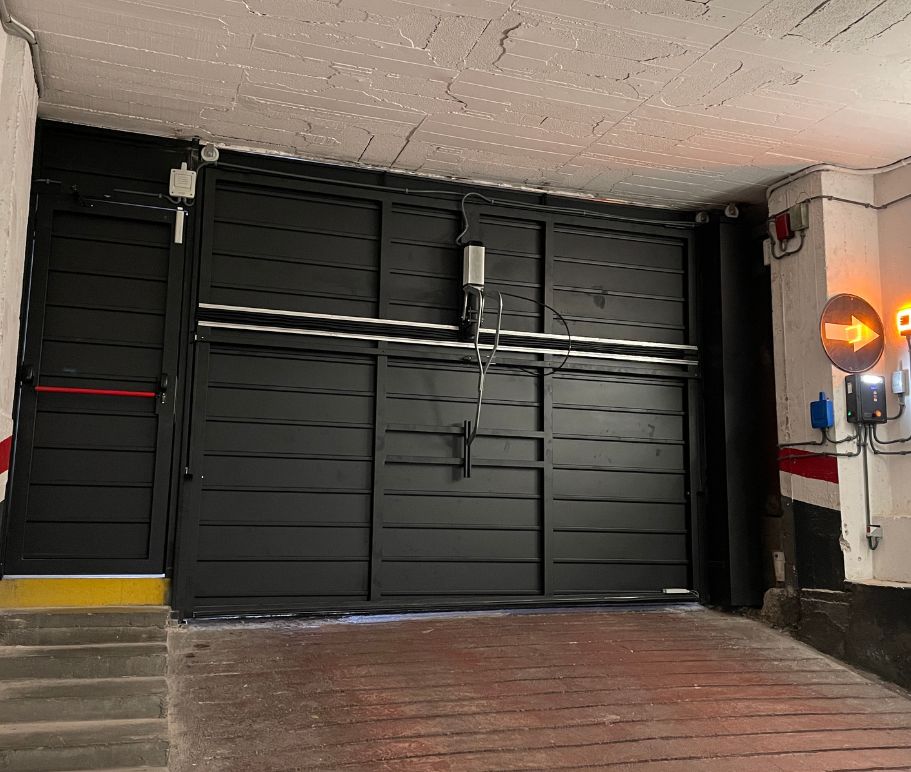
Automatic door regulations in Spain are not defined by a single document, but by a set of directives, technical standards, and legal provisions that establish the safety requirements and mandatory maintenance these installations must comply with.
Beyond being a technical requirement, compliance is a direct responsibility that impacts people’s safety and the legal management of any building. For good reason: an automatic door that does not comply with regulations increases the risk of accidents and exposes owners and managers to potential penalties and liabilities in the event of an incident.
Automatic door regulations: regulatory framework
Automatic door regulations are structured through various European directives, technical standards, and national requirements that establish the minimum criteria these systems must meet from installation onwards.
The main regulations and requirements are detailed below:
- Machinery Directive 2006/42/EC:
At the European level, automatic doors are considered motorized systems and must therefore comply with this directive. This regulation governs aspects related to the design, manufacturing, and safe operation of the installation. In practice, it requires doors to incorporate measures that eliminate or reduce risks such as entrapment, impacts, or operational failures.
- UNE-EN 16005 standard:
Within automatic door regulations, UNE-EN 16005 is one of the key standards, as it establishes safety requirements for the use of automatic pedestrian doors. This standard regulates fundamental aspects such as opening and closing speeds, maximum permitted forces, safety distances, and the proper functioning of detection and protection systems.
- CE marking:
It regulates aspects related to the commercialization and commissioning of automatic doors, certifying that they comply with all applicable European regulations regarding health, safety, and user protection. More than a standard itself, CE marking is a declaration of conformity by the manufacturer, confirming that the system has been designed, manufactured, and installed in accordance with current European directives.
- Risk assessment:
As a preliminary phase before installation, automatic door regulations require a comprehensive risk assessment that considers the environment, type of use, and flow of people. This study makes it possible to identify potential hazards and define the necessary safety measures for each case.
- Presence detection systems:
Any operational automatic door must incorporate sensors to detect the presence of people and objects in the passage area.
- Anti-entrapment safety devices:
Within automatic door regulations, there is an obligation to incorporate safety systems that prevent entrapment risks during operation. These devices allow the closing force to be limited or reverse the door’s movement when an obstacle is detected.
- Mandatory signage:
It is necessary to properly signpost the automatic door, indicating its operation to avoid confusion among users.
- Accessibility requirements:
Doors must facilitate access for people with reduced mobility, complying with universal accessibility regulations.
- Compliance with the Technical Building Code (CTE):
As part of automatic door regulations, the Technical Building Code (CTE) establishes the basic conditions of safety, usability, and accessibility that these installations must meet.
- Technical documentation and declaration of conformity:
Every installation must be accompanied by complete technical documentation, including manuals, certificates, and the CE declaration of conformity.
- Construction Products Regulation (EU) 305/2011:
The automatic door is considered an integrated element of the building and must therefore comply with essential requirements related to structural safety, fire safety, hygiene, health, and environmental protection.
- Electromagnetic Compatibility Directive 2014/30/EU:
Compliance is key to ensuring the reliability of sensors, control panels, and safety devices, preventing failures that could compromise the system’s operation or put users at risk.
- Low Voltage Directive 2014/35/EU:
Its objective is to ensure that all electrical components of the installation, such as motors, control panels, and wiring, comply with protection requirements against electrical risks such as electric shocks, short circuits, or overheating.
- UNE 85635 standard:
It defines how periodic inspections must be carried out, which aspects must be checked in each intervention, and how to properly document maintenance operations. Its application ensures that the door maintains the required safety conditions throughout its service life.
Conditions for a compliant installation
For an installation to be considered compliant with automatic door regulations, it is not enough for it to function correctly: it must meet a series of technical, legal, and safety requirements from design to commissioning.
The key aspects that a compliant installation must consider are the following:
- Selection of certified equipment: This implies that all components, sensors, safety systems, and mechanical elements are certified and comply with applicable European regulations.
- Installation by authorized companies: It must be carried out by specialized technicians who are familiar with current regulations and the manufacturer’s specifications.
- Initial system verification: Before commissioning, it is mandatory to verify that all components function correctly through testing and safety validations.
- Installation certification: A certificate must be issued to confirm compliance with regulatory requirements.
- Delivery of technical documentation: The owner or building manager must receive all the necessary documentation for use and maintenance.
- Commissioning: It is only possible once it has been verified that the installation complies with all automatic door regulations.

Mandatory maintenance of automatic doors
After installation, automatic door regulations establish that owners and building managers must focus on periodic maintenance, one of the most important aspects for safety and the system’s operational continuity.
In Spain, although there is no single mandatory frequency for all cases, technical recommendations and requirements derived from standards such as UNE-EN 16005 and the Technical Building Code (CTE) are established.
Automatic door maintenance must include:
- Inspection of the proper functioning of sensors and detection systems
- Verification of safety devices
- Adjustment of opening and closing forces and speeds
- Inspection of mechanical components (guides, motors, belts)
- Verification of electrical systems
- Cleaning and lubrication of components
Responsibilities and consequences of non-compliance
What happens if automatic door regulations are not complied with? Failure to comply can have significant legal and economic implications.
Responsibilities:
- Owners or homeowners’ associations: they are responsible for ensuring that installations comply with regulations.
- Property managers: they must ensure proper maintenance.
- Installation and maintenance companies: they are responsible for carrying out work in accordance with regulations.
Consequences of non-compliance:
- Financial penalties for legal non-compliance
- Civil liability in case of accident
- Possible criminal liabilities in serious cases
- Increased risks for users
- High costs due to urgent repairs or replacements
ASZENDE: Experience and reliability in automatic doors
The correct application of automatic door regulations requires technical knowledge, experience, and continuous updates on regulatory changes.
In this regard, specialized companies such as Aszende play a key role. Their experience in installation, maintenance, and regulatory compliance allows communities and businesses to confidently delegate the management of their automatic doors.
With more than 40 years of experience, Aszende provides a comprehensive approach that ensures the proper functioning of each system and its adaptation to current technical and legal requirements.
Relying on specialized professionals is the most effective way to reduce risks, optimize operations, and ensure regulatory compliance. In any case, complying with automatic door regulations not only protects people but also ensures the continuity and reliability of any building.
We can help you
Would you like to know more about our products, services and vertical mobility solutions?
Do not hesitate and contact us without any obligation using this form and we will contact you as soon as possible.
If you want to know more about the treatment of your data, please visit our privacy policy.


